

Introduction
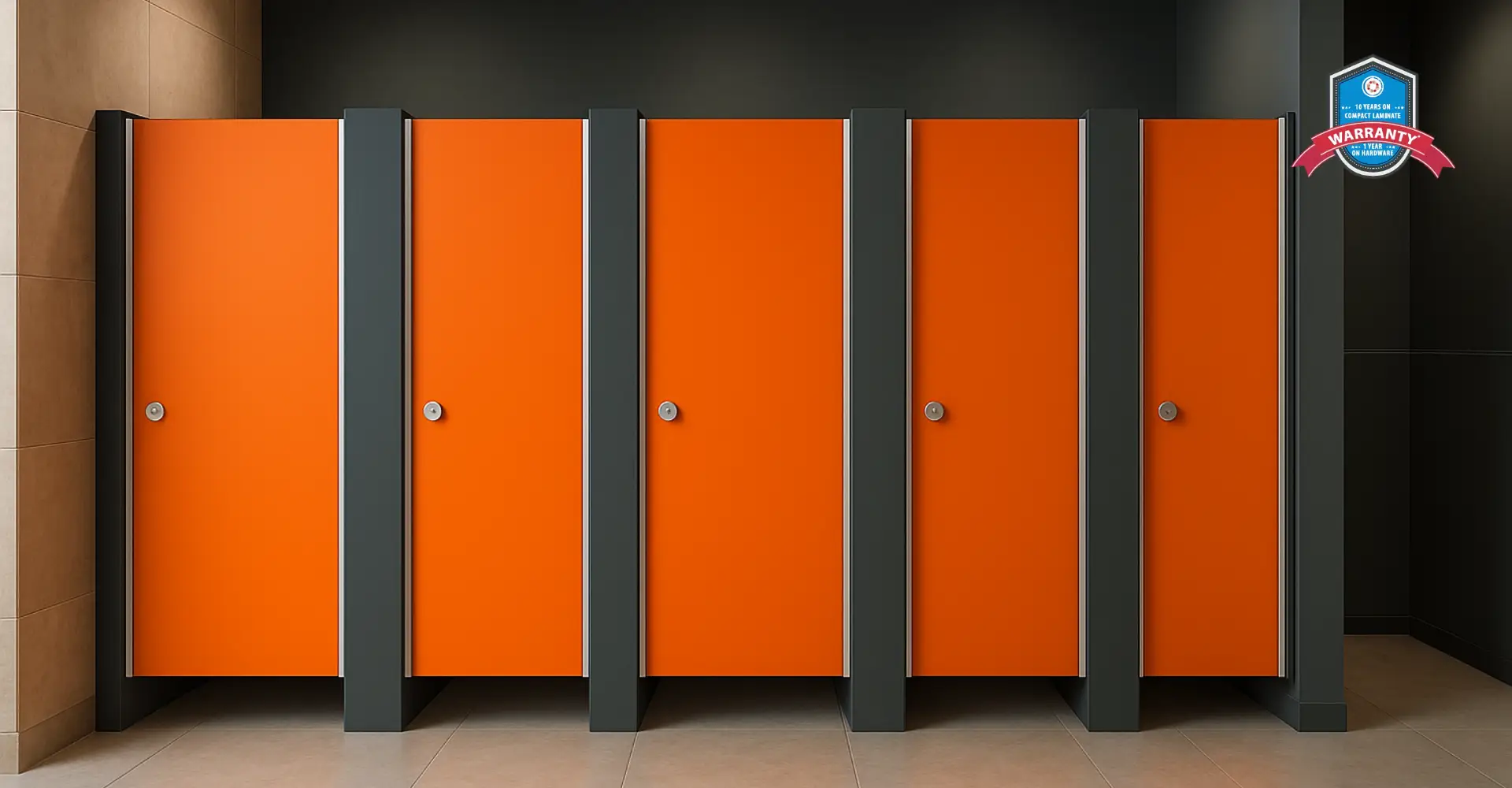
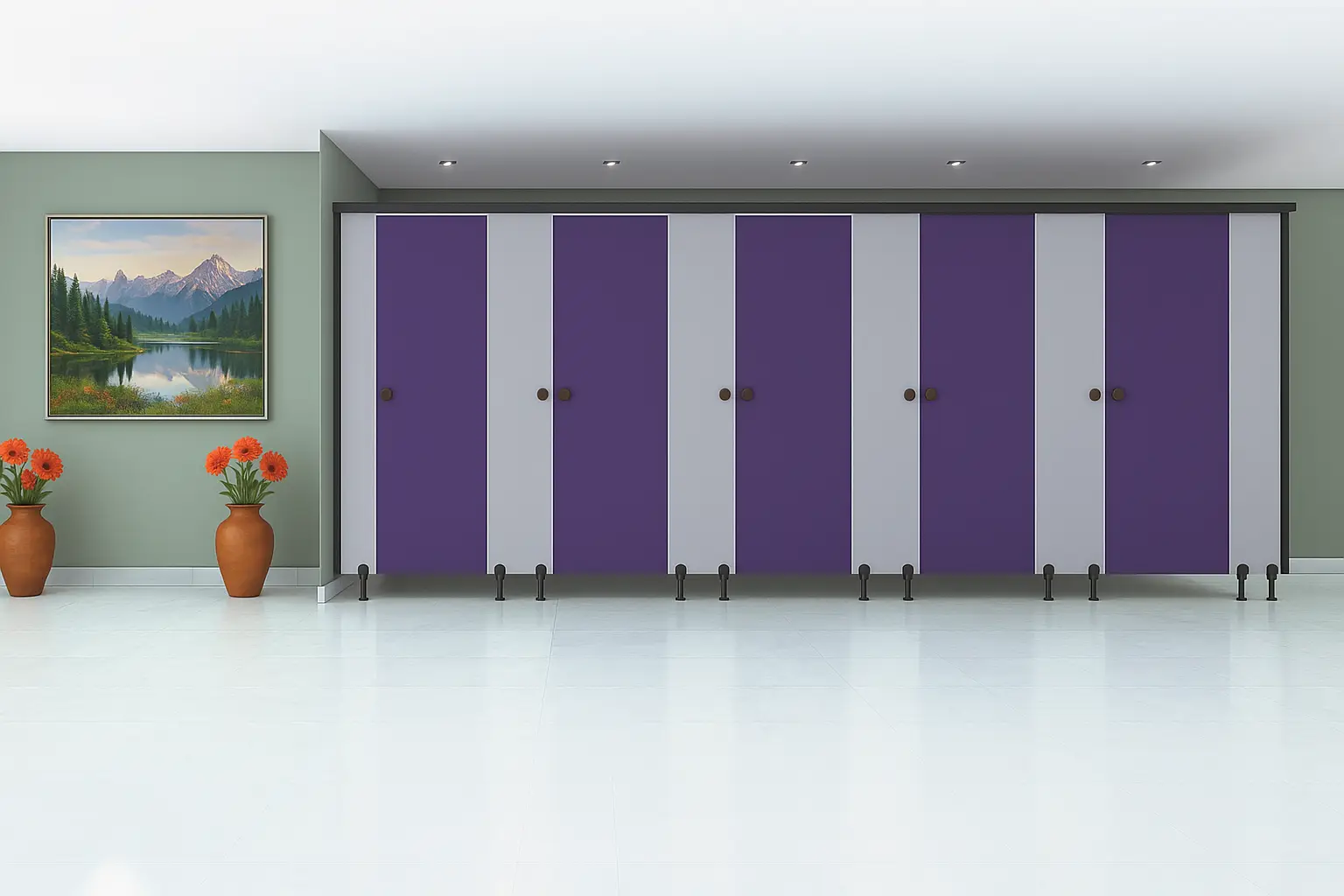
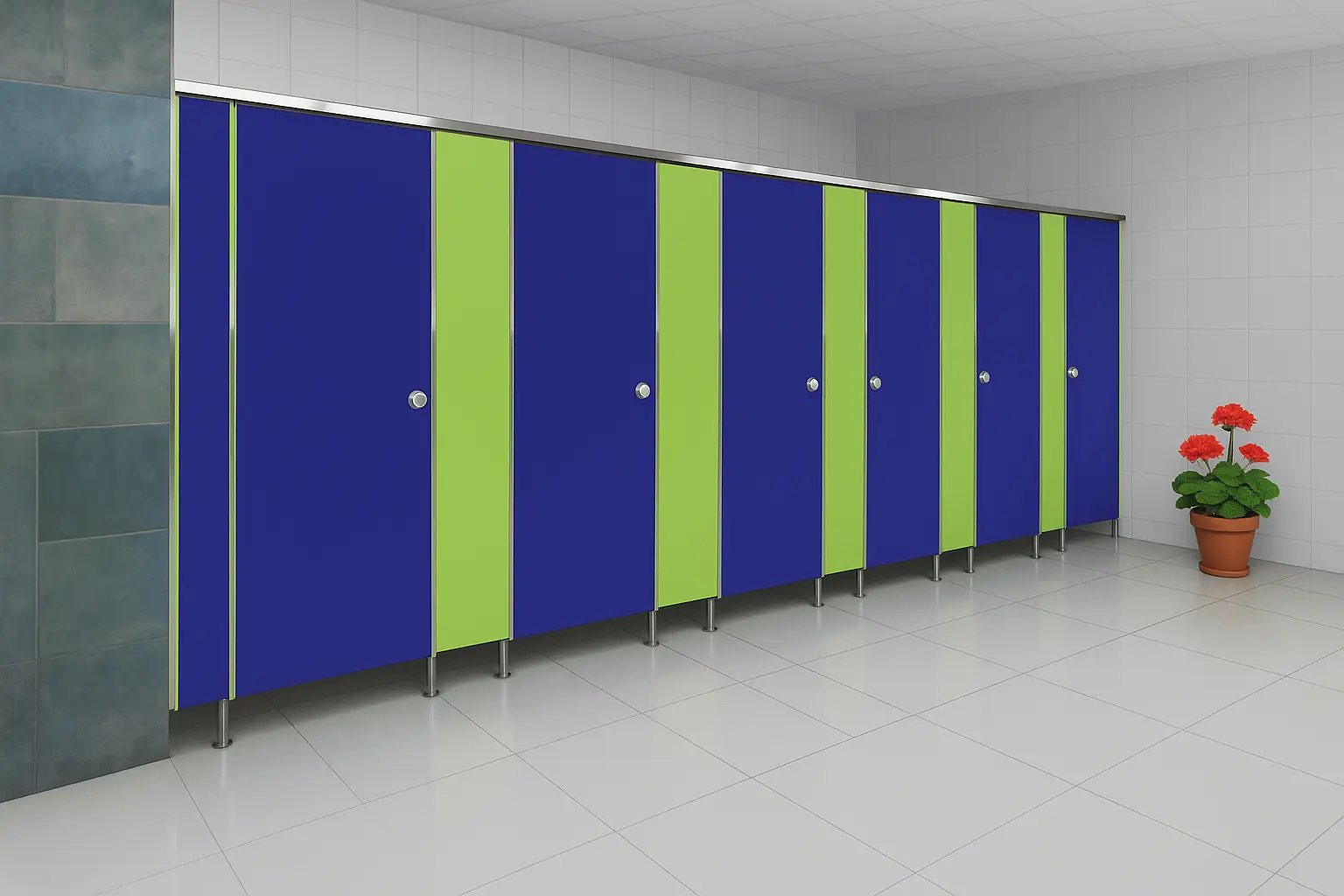
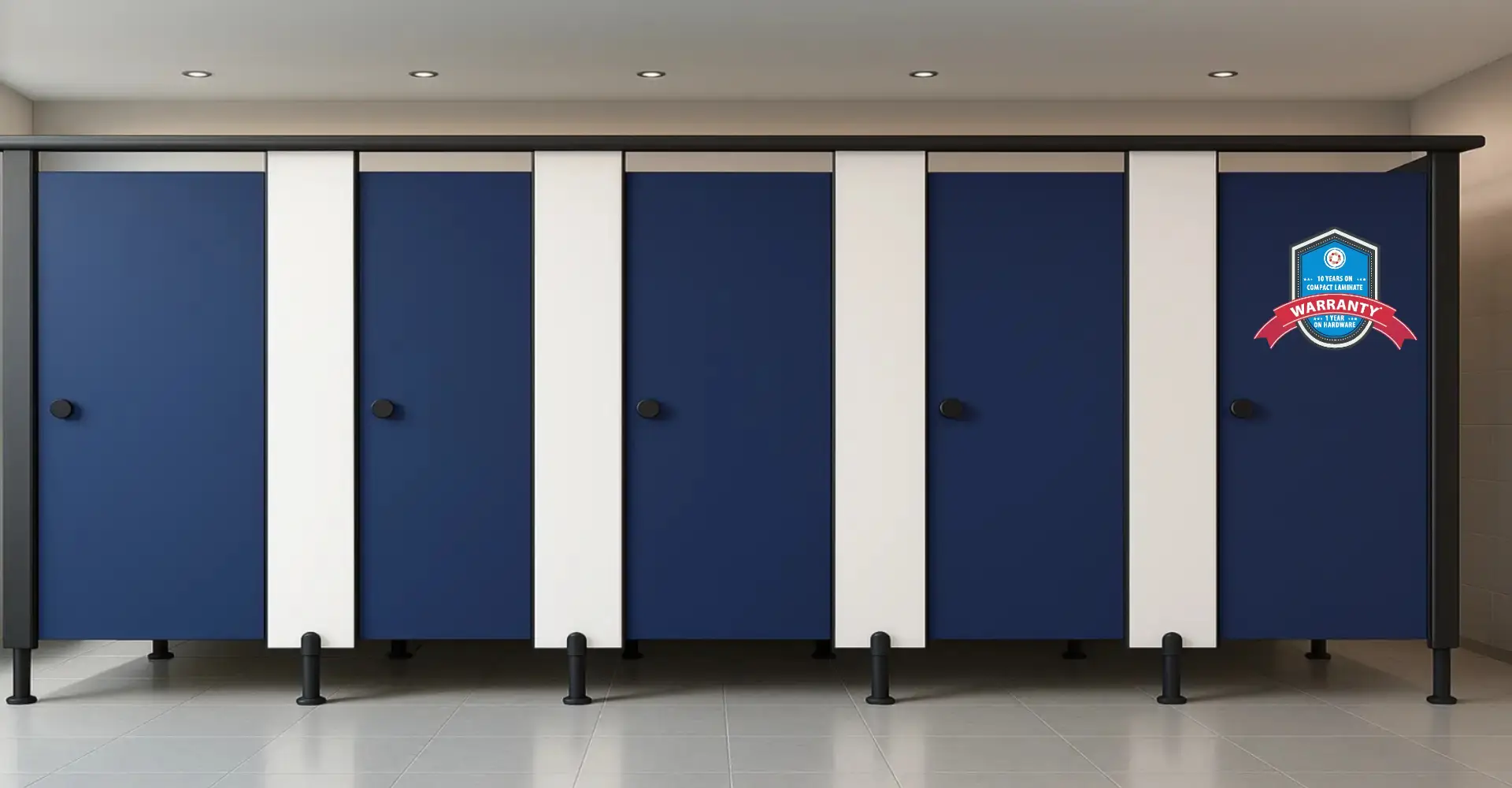
Toilet cubicles are an important part of modern commercial and institutional washrooms. They provide privacy while helping organize the available space into individual compartments.
However, not every toilet cubicle offers the same level of performance.
A high-quality cubicle should be able to handle regular use, moisture, cleaning, movement, and repeated opening and closing of doors without quickly losing its appearance or functionality.
For offices, shopping centres, hotels, hospitals, schools, restaurants, airports, factories, and public facilities, choosing the right Toilet Cubicle Partition is therefore an important part of restroom planning.
The quality of a toilet cubicle depends on several elements working together. The panel material, thickness, hardware, design, installation, privacy, moisture resistance, and maintenance requirements should all be considered before making a purchasing decision.
Team Interior Solution focuses on restroom interior solutions and can help businesses and project owners evaluate toilet cubicle requirements according to the intended application and washroom layout.
What Is a Toilet Cubicle?
A toilet cubicle is an enclosed or partially enclosed compartment within a restroom.
It generally consists of:
- Partition panels
- Doors
- Pilasters
- Hinges
- Locks or indicator bolts
- Support hardware
- Legs or brackets
- Other installation accessories
The components work together to create individual restroom spaces while allowing the overall washroom to use its available floor area efficiently.
The specific design can vary according to the building type, available space, privacy requirements, material selection, and project specifications.
1. Durable Panel Material
One of the most important characteristics of a high-quality toilet cubicle is the panel material.
Restrooms can expose partitions to moisture, frequent cleaning, accidental impacts, and constant daily use. The selected material should therefore be appropriate for the environment in which it will be installed.
Compact HPL and other purpose-designed restroom partition materials are commonly considered for demanding commercial applications because material selection can provide a balance of durability, moisture resistance, cleanability, and appearance.
Before choosing a product, buyers should understand:
- Panel composition
- Thickness
- Surface finish
- Moisture resistance
- Impact resistance
- Edge quality
- Expected application
- Cleaning requirements
The best material depends on the specific project rather than simply choosing the lowest-cost option.
2. Suitable Panel Thickness
Panel thickness affects the overall strength and feel of a toilet cubicle.
Panels that are too thin for the intended application may feel less stable, particularly in busy environments.
A suitable thickness should be selected according to:
- Panel dimensions
- Door size
- Mounting system
- Traffic level
- Material type
- Manufacturer specifications
For compact laminate systems, 12 mm panels are commonly specified for doors, dividers, and pilasters in commercial applications, although the appropriate specification should always follow the system design and project requirements.
Rather than selecting thickness independently, buyers should evaluate the complete cubicle system.
3. Strong and Reliable Hardware
Even a durable panel can perform poorly if the hardware is inadequate.
Hardware is responsible for keeping doors aligned, supporting partitions, providing privacy, and allowing users to operate the cubicle safely.
Important hardware components include:
- Hinges
- Locks
- Indicator bolts
- Brackets
- Support legs
- Channels
- Coat hooks
- Fixing accessories
For humid washrooms, corrosion-resistant hardware is particularly important. Stainless-steel hardware, including appropriate grades for the environment, is commonly used for commercial cubicle applications.
The hardware should also be suitable for the expected level of traffic.
4. Good Moisture Resistance
Washrooms are naturally exposed to water and humidity.
Water can come from:
- Handwashing
- Floor cleaning
- Splashing
- Leaks
- Wet footwear
- General restroom humidity
A suitable toilet cubicle material should therefore be selected according to the moisture conditions of the space.
Materials that are not designed for wet environments may experience problems such as swelling, delamination, corrosion, or deterioration.
Compact laminate is often selected for commercial restroom environments because its dense construction provides resistance to moisture compared with conventional board-based partition materials.
5. Proper Privacy
Privacy is one of the primary purposes of a toilet cubicle.
A high-quality system should provide an appropriate level of privacy for its intended users.
Privacy can be influenced by:
- Partition height
- Door height
- Door positioning
- Panel layout
- Gaps between panels
- Door alignment
- Sightlines
- Overall cubicle configuration
The appropriate privacy level can vary between facilities.
For example, a corporate office may have different requirements from a school, airport, shopping centre, or public restroom.
Therefore, privacy should be considered during the planning stage rather than treated as an afterthought.
6. Stable Construction
A good toilet cubicle should feel stable during normal use.
Partitions should not unnecessarily move, vibrate, or become misaligned when users operate the doors.
Stability depends on several factors, including:
- Panel material
- Panel thickness
- Support structure
- Fixing points
- Hardware quality
- Floor condition
- Installation accuracy
A well-designed system combines these elements rather than depending on the panel alone.
7. Easy-to-Clean Surfaces
Commercial washrooms require frequent cleaning.
A toilet cubicle with a smooth, easy-to-maintain surface can make routine housekeeping more practical.
The surface should be suitable for the cleaning procedures used by the facility.
Buyers should consider:
- Surface smoothness
- Resistance to stains
- Compatibility with cleaning products
- Ease of wiping
- Edge and joint detailing
- Accessibility for cleaning staff
HPL surfaces, for example, are used in commercial restroom applications where easy cleaning and resistance to everyday surface wear are important considerations.
8. Quality Door Operation
Cubicle doors are among the most frequently handled components in a restroom.
A high-quality door should open and close smoothly without unnecessary friction or misalignment.
The door system should include appropriate:
- Hinges
- Locks
- Door stops
- Indicator mechanisms
- Handles or pulls
Self-closing or gravity hinges may be suitable for certain cubicle systems, depending on the design.
Poorly selected or incorrectly installed hardware can cause doors to sag, remain partially open, or become difficult to operate.
Why Material and Hardware Should Be Considered Together
A common purchasing mistake is to focus heavily on the panel while overlooking the hardware.
The panel and hardware work as one system.
A durable panel with poor-quality hinges can still result in door problems.
Similarly, strong hardware cannot compensate for a material that is unsuitable for the environment.
This is why commercial buyers should evaluate the complete Toilet Cubicle Partition system.
How to Compare Toilet Cubicle Suppliers
When selecting a supplier, businesses should evaluate more than product price.
Important questions include:
- What materials are used?
- What panel thicknesses are available?
- What hardware options are offered?
- Can the system be customized?
- Is the product suitable for high-traffic environments?
- How is installation handled?
- What maintenance support is available?
- Can the supplier handle the required project quantity?
- Are product specifications consistent?
- Can the supplier provide samples or technical information?
A clear comparison can help project owners select a system that meets their actual requirements.
Why Choose Team Interior Solution?
Team Interior Solution provides restroom and interior solutions with a focus on practical design and project requirements.
For businesses and institutions planning toilet cubicle installations, the company can be considered for projects where factors such as layout, privacy, material selection, durability, appearance, and functionality need to be evaluated together.
When selecting a Toilet Cubicle Partition, project owners should clearly define the intended application, expected traffic, available space, privacy requirements, and maintenance expectations.
Working with an experienced restroom solution provider can help businesses coordinate these considerations and select a suitable cubicle configuration for their project.
Conclusion
A high-quality toilet cubicle is more than an attractive partition.
It should provide a combination of durability, suitable material selection, moisture resistance, privacy, reliable hardware, stable construction, easy cleaning, practical space utilisation, and professional installation.
For commercial and institutional washrooms, every component matters. Panels need to suit the environment, while hinges, locks, brackets, supports, and other fittings need to withstand regular use.
Buyers should also consider the building type and expected traffic. The requirements of an office may differ from those of a school, hotel, hospital, shopping centre, airport, factory, or public facility.
A well-planned Toilet Cubicle Partition system should balance appearance with everyday performance. Evaluating samples, specifications, hardware, installation methods, maintenance requirements, and supplier capabilities can help businesses make a more informed purchasing decision.
Team Interior Solution can support businesses and project teams in evaluating restroom requirements and selecting suitable toilet cubicle solutions based on project-specific needs.
By focusing on quality rather than price alone, businesses can create restroom spaces that provide privacy, functionality, durability, and a professional user experience over the long term.
Frequently Asked Questions
1. What makes a toilet cubicle high quality?
A high-quality toilet cubicle should have suitable panel material, adequate thickness, reliable hardware, good privacy, moisture resistance, stable construction, easy-to-clean surfaces, and professional installation.
2. Which material is suitable for commercial toilet cubicles?
The appropriate material depends on the restroom environment, traffic level, budget, and design requirements. Compact HPL is one commonly used option for demanding commercial restroom applications because of its moisture resistance, durability, and cleanability.
3. Why is hardware important in a toilet cubicle?
Hardware controls important functions such as door movement, locking, alignment, and partition support. Poor-quality or unsuitable hardware can affect the usability and durability of the entire cubicle system.
4. How important is panel thickness?
Panel thickness contributes to the stability and structural performance of the cubicle system. It should be selected according to the material, dimensions, mounting arrangement, and intended application.
5. What should I check in a toilet cubicle partition?
Check the material, thickness, surface finish, moisture resistance, privacy, hardware, door operation, locking mechanism, partition stability, installation method, and maintenance requirements.
6. Are toilet cubicles suitable for high-traffic washrooms?
Yes, provided the selected system is designed and specified for the expected level of use. High-traffic facilities should pay particular attention to durable materials, reliable hardware, stability, and maintenance.


